Le Laboratoire de Physique des Gaz et des Plasmas
A Joint Research Unit (UMR 8578) affiliated with the CNRS and Paris Saclay University. The research conducted at the LPGP focuses on fundamental plasma physics, combining experimental and theoretical work. The research areas align with the thematic priorities of the CNRS Institute of Engineering.
Recents Publications

Laser field reconstruction for the modeling of laser-plasma interaction in cylindrical geometry
F. Massimo, I. Moulanier, A. Guerente, O. Khomyshyn, M. Masckala, T. L. Steyn, U. Schramm, A. Irman, and B. Cros
Physical Review E
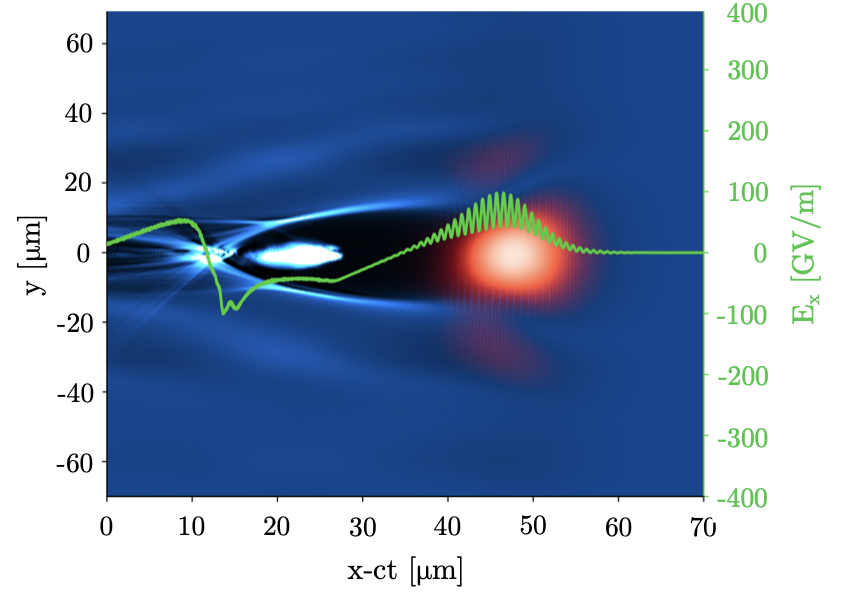
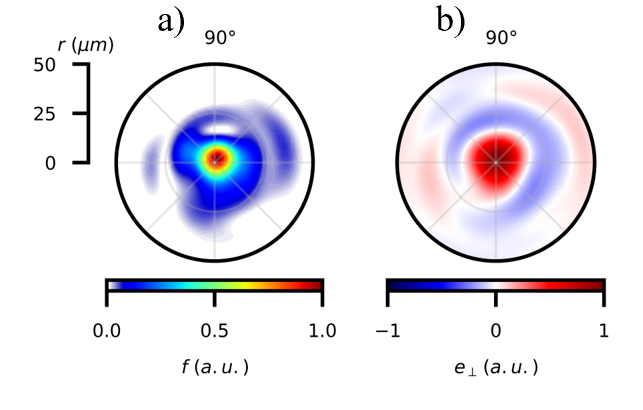
High-accuracy modeling with Particle in Cell simulations of laser-plasma interactions at high intensity requires precise knowledge of the laser field, including its asymmetries. In this work, we present an implementation of the Gerchberg-Saxton algorithm with mode decomposition (GSA-MD) using the Laguerre-Gauss mode basis in cylindrical geometry to reconstruct its electromagnetic field. This technique is particularly suited for lasers with a high degree of azimuthal symmetry.
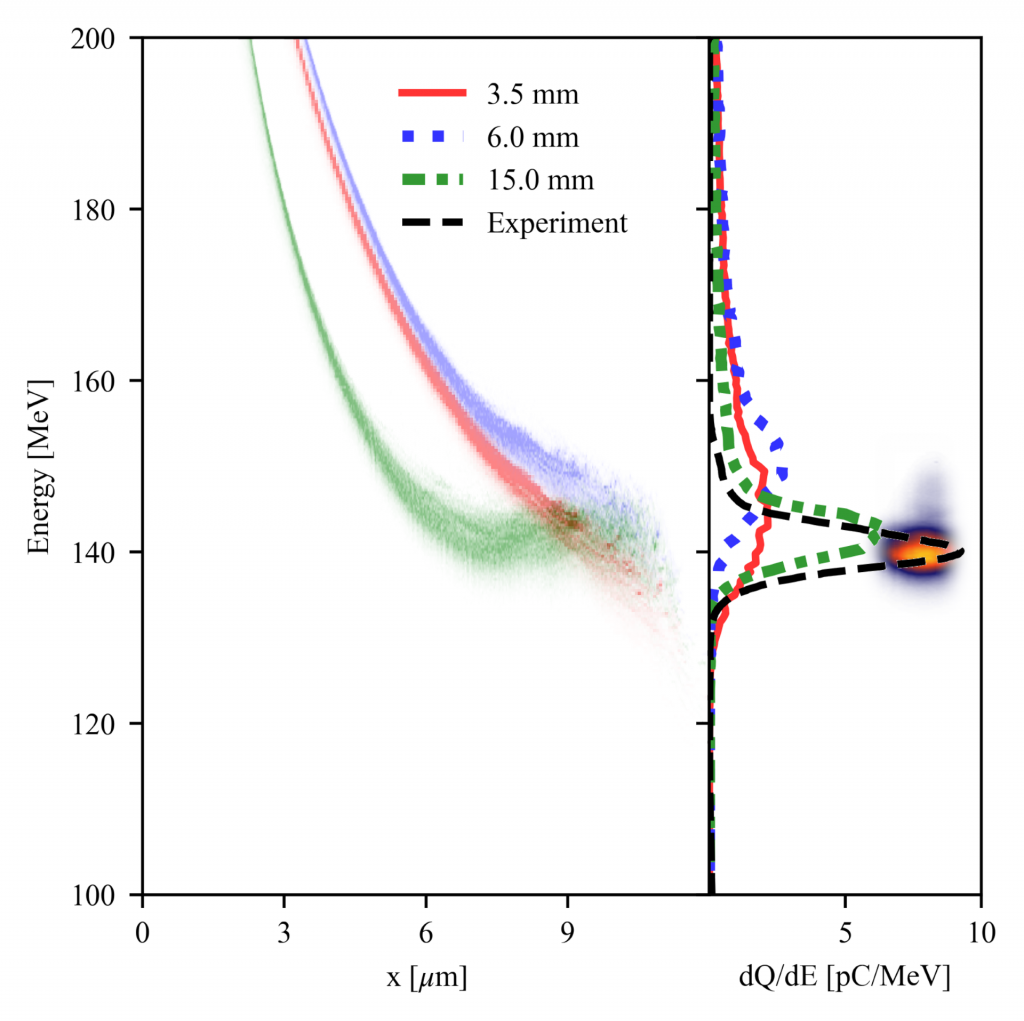
Plasma dechirper and lens for electron beams from laser wakefieldacceleration in a tailored density profile
T.L. Steyn, A. Panchal, O. Vasilovici, F.M. Herrmann, S. Schöbel, P.
Ufer, O. Khomyshyn, Y.-Y. Chang, I. Moulanier, M. Masckala, M. Samir, C.
Ballage, M. LaBerge, P. Désesquelles, F. Massimo, S. Dobosz Dufrénoy, U.
Schramm, A. Irman, B. Cros
Short abstract:
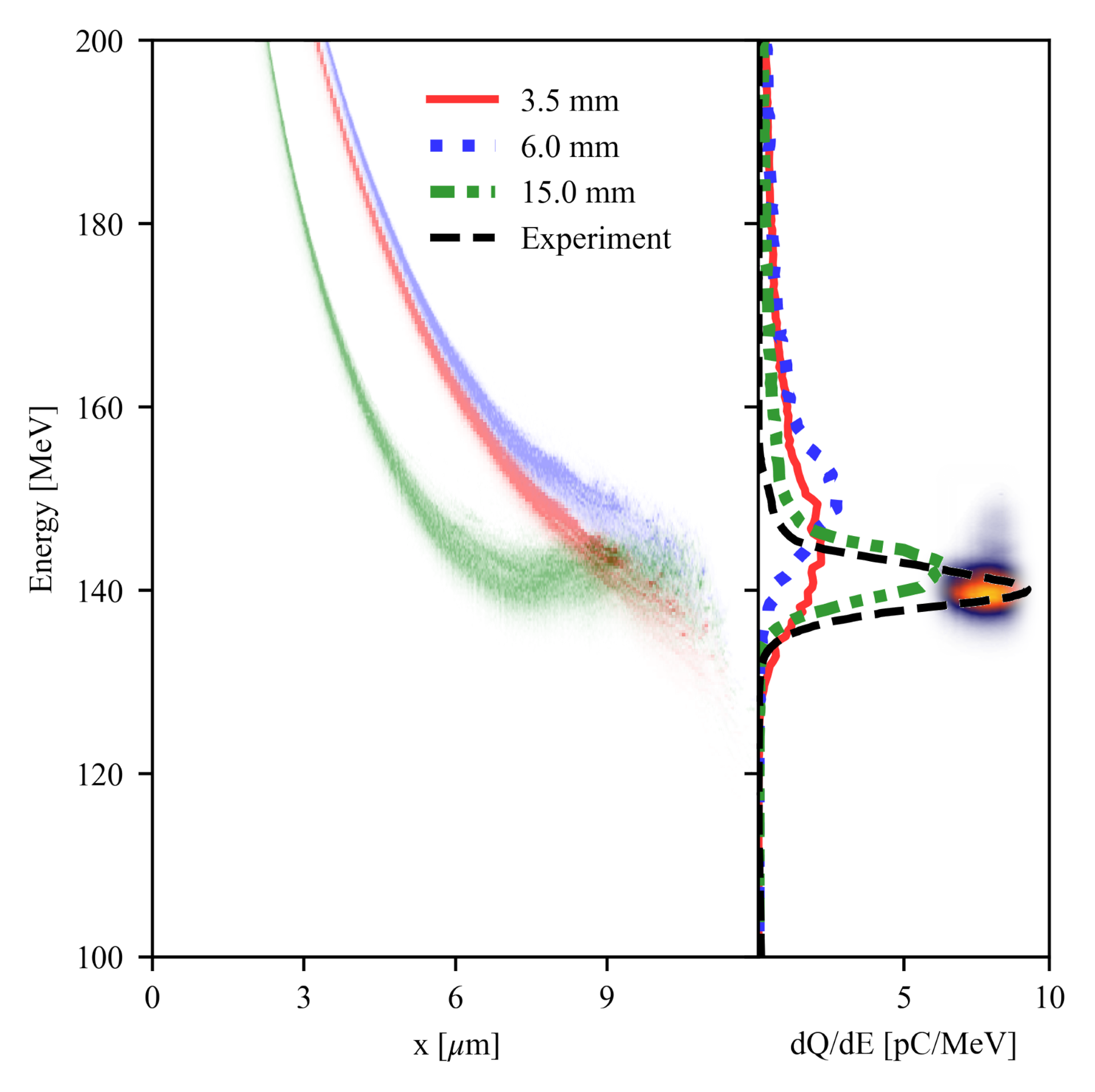
Minimizing energy spread and divergence is essential for using electron
beams from laser wakefield accelerators (LWFA) in applications such as
compact free-electron lasers. We report the first experimental
demonstration of dechirping of an LWFA beam, combined with a plasma
lensing effect, within a single tailored plasma density profile in a gas
cell. These mechanisms take place in a down-ramp followed by a long,
low-density plasma tail, and generate 190 MeV electron beams with a FWHM
charge of 40 pC, 3.4% energy spread and 0.46 mrad rms divergence,
reaching a peak spectral brightness of 8 pC/MeV/mrad.
Link:
Physical Review Accelerators and Beams,
https://doi.org/10.1103/fdkn-8hpg (open access)
arXiv: https://arxiv.org/abs/2604.26486

Combined tools for particle-in-cell simulations performed with transversely asymmetric chirped lasers
I. Moulanier, F. Massimo, T. L. Steyn et B. Cros, Juillet 2026, Physics of Plasma 33 (7)
We introduce the Asymmetric Chirped Electric field reconstruction (ACE) toolbox, a suite of algorithms enabling the reconstruction of a laser transverse distribution coupled to a chirped temporal profile. This suite includes the implementation of the reconstructed distribution in particle in-cell simulations in cylindrical and Cartesian geometry. Under the assumption of negligible spatiotemporal couplings, the ACE toolbox extends a previously established method for realistic simulations of the transverse distribution by adding spectral chirping to the modal decomposition of the electric field. The relevance of the ACE toolbox is demonstrated through the modeling of a Laser Wakefield Acceleration experiment where the produced electron bunch was optimized via spectral chirping of the laser pulse.
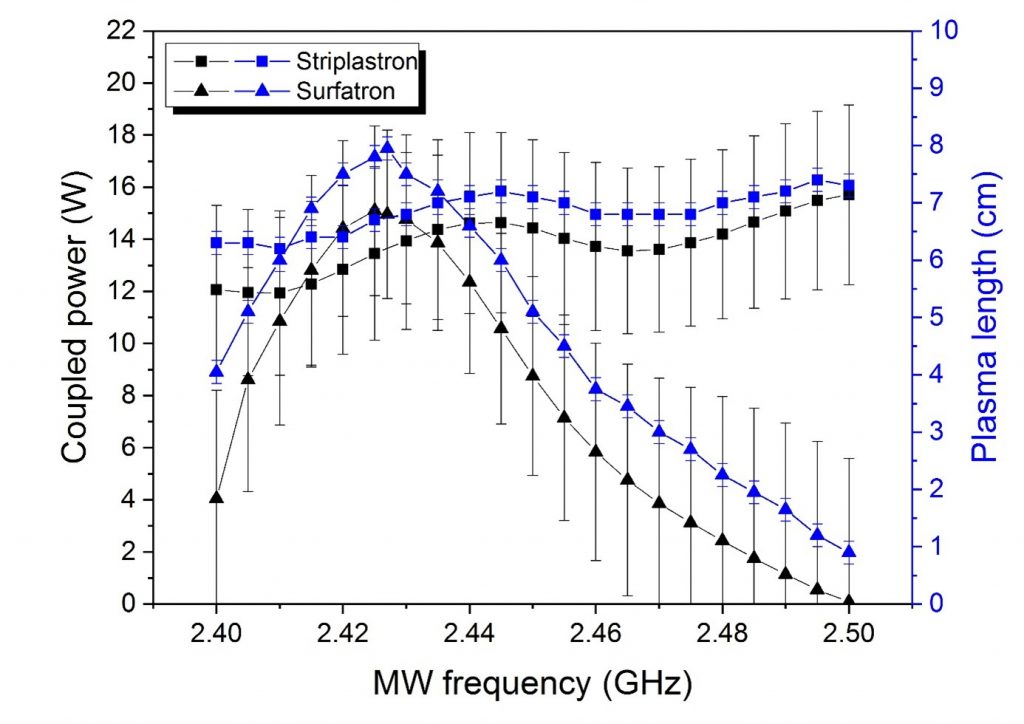
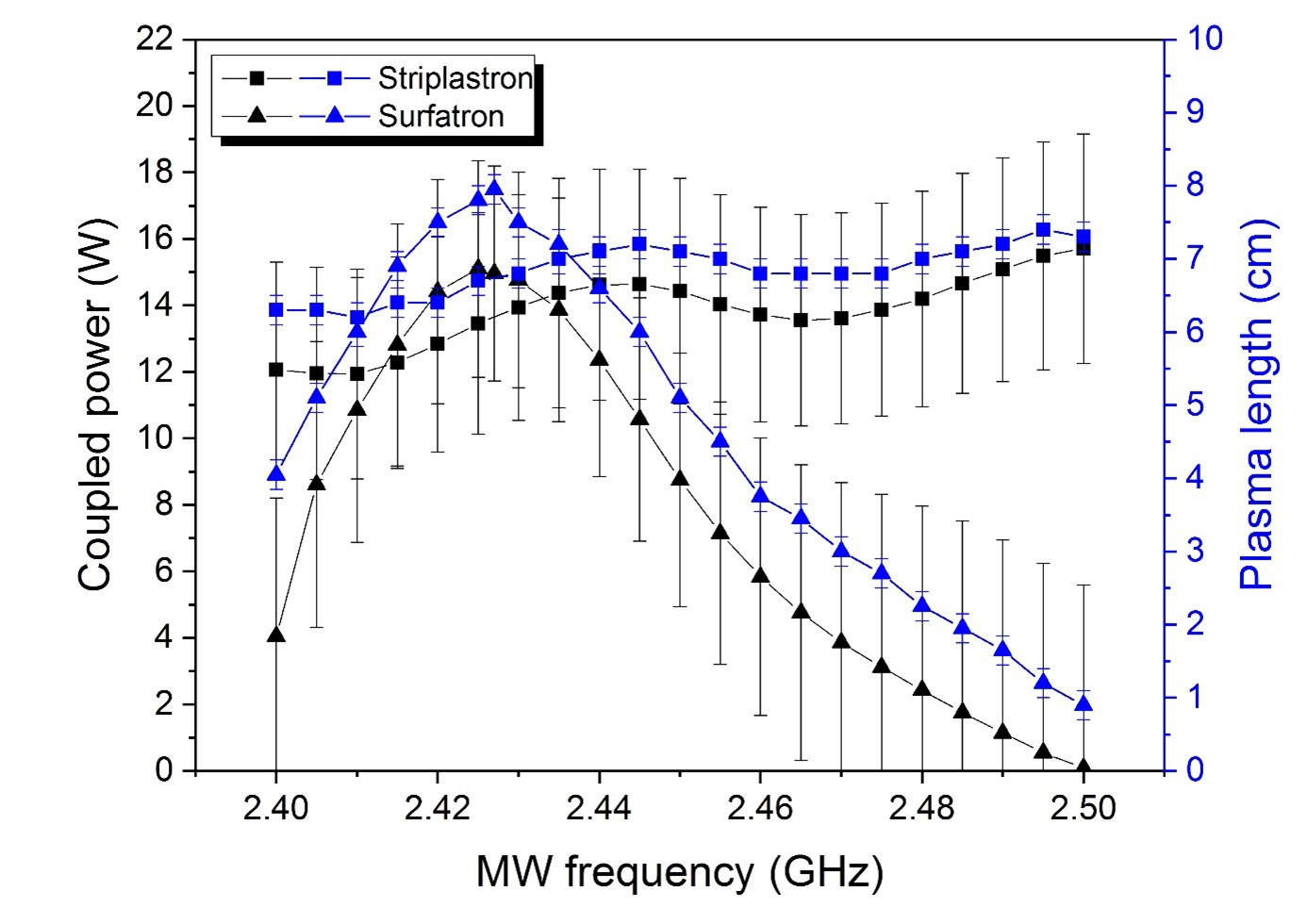
Power coupling and plasma parameters of low-pressure microwave argon discharges in capillaries: comparison between surfatron and striplastron launchers
O. Leroy, F. Coquery, T. Minea, and G.D. Stancu – Vacuum, Volume 252, September 2026, 115429
This article presents a comparison of the macroscopic characterizations of continuous microwave-generated plasmas from surface waves in dielectric capillary tubes (internal diameter of the order of 1 mm), using two different exciters: a surfatron and a striplastron. Parameters such as coupled power fraction, power density, and plasma length are determined as a function of injected microwave power (0-50 W), microwave frequency (2.4-2.5 GHz), and gas flow rate (300-700 ml/min). All characterizations are performed in argon micro-discharges operating in a low-pressure gas flow (1-600 mbar). https://doi.org/10.1016/j.vacuum.2026.115429
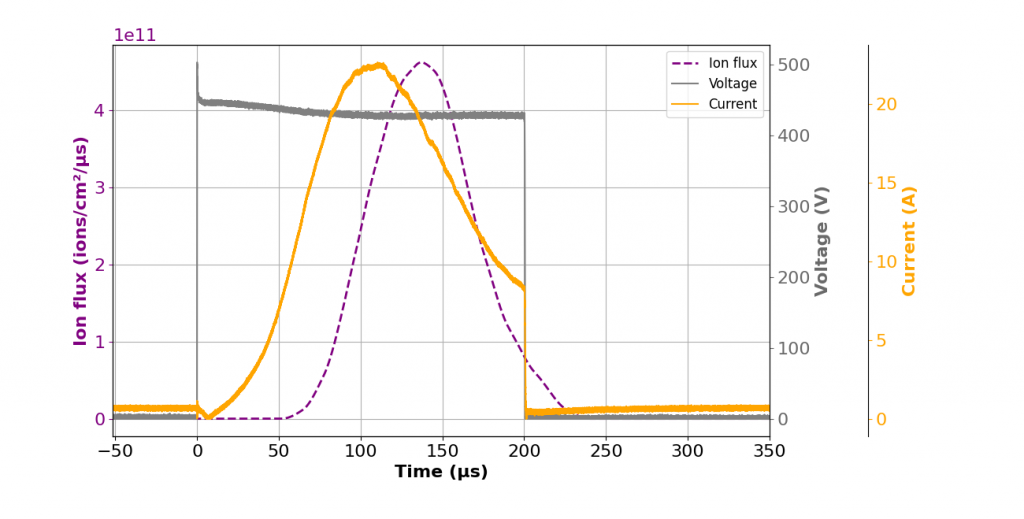
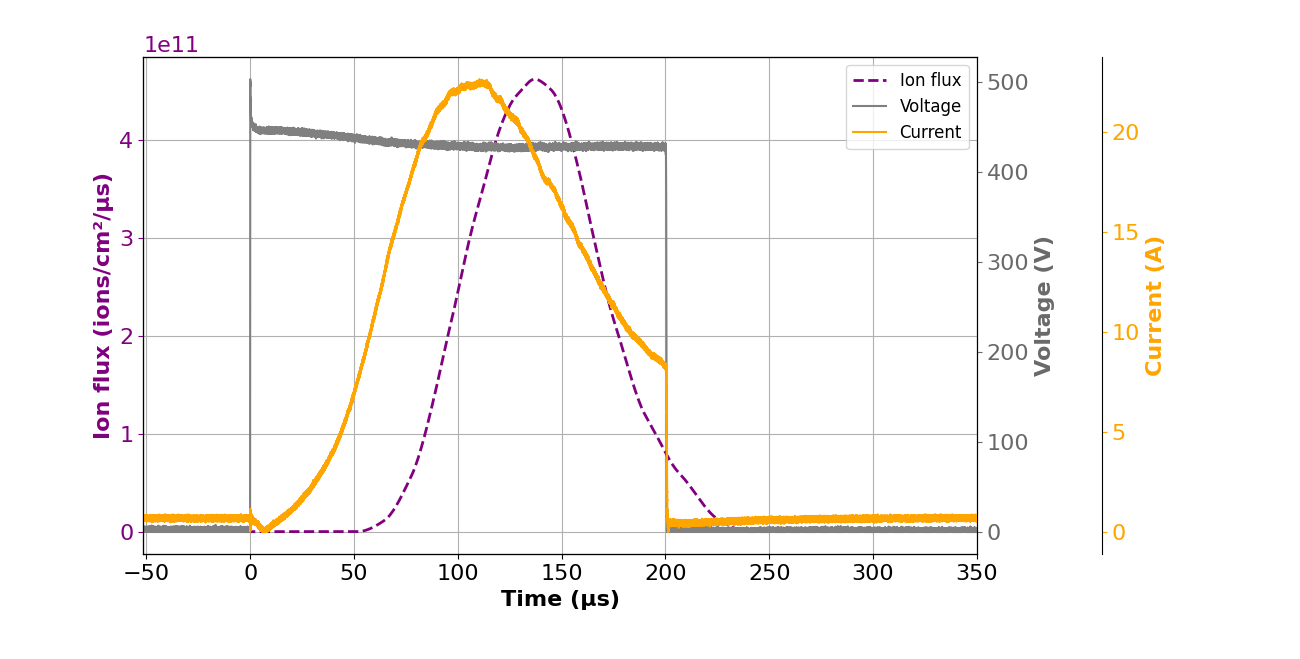
Microsecond ion flux mapping in HiPIMS via magnetized QCM probe
Charles Ballage, Anna Kapran, Ovidiu Vasilovici, Ahmed Bennacef, Tiberiu Minea
This article presents a diagnostic method based on a modified quartz crystal microbalance, enabling the resolution at the microsecond scale of the ion flux resulting from the sputtering of a magnetron target in HiPIMS (High Power Impulse Magnetron Sputtering) mode. Patented by LPGP via CNRS Innovation, this unique approach to date allows for quantitative characterization of the dynamics of the ionic flux contributing to deposition during a HiPIMS pulse. https://doi.org/10.1016/j.surfcoat.2025.133047

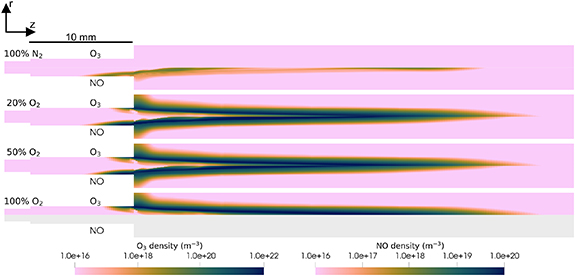
Plasma–flow coupling and metastable evolution in a cold argon plasma jet: a computational fluid dynamics study
Duarte Gonçalves, João Santos Sousa, Stéphane Pasquiers, Mário Lino da Silva and Luís L Alves
Published 31 March 2026 • © 2026 The Author(s). Published by IOP Publishing Ltd
Plasma Sources Science and Technology, Volume 35, Number 3 Citation Duarte Gonçalves et al 2026 Plasma Sources Sci. Technol. 35 035022

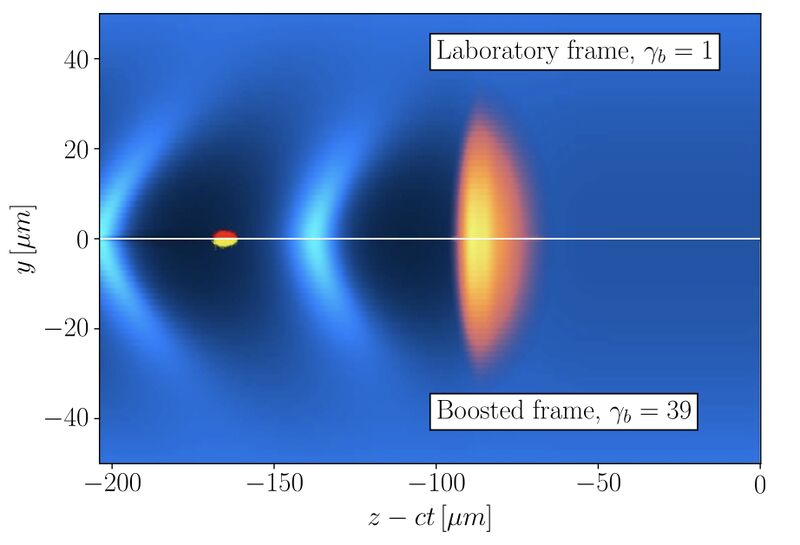
Modeling laser-wakefield accelerators using the time-averaged ponderomotive approximation in a Lorentz boosted frame
Francesco Massimo, Carlo Benedetti, Davide Terzani, Arnaud Beck, Brigitte Cros
HAL-link
Future high-fidelity simulations of high-energy laser-plasma wakefield accelerators will need to model the propagation of intense lasers through meter-scale plasmas, which will require significant computational resources. In this article, a combination of two known numerical techniques to reduce the required resources is presented. This new combination of simulation techniques could become essential for modeling a future multi-TeV collider based on laser wakefield acceleration (LWFA).

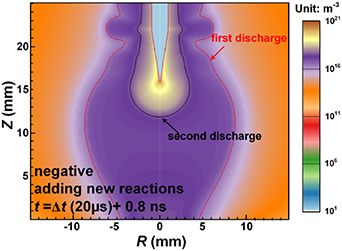
Investigation of the diffusive ionization wave in double-pulse experiment in low-pressure air-like mixtures
Yulin Guo, Yaqi Zhang, Yifei Zhu, Anbang Sun and Pierre Tardiveau
Published 7 August 2025 • © 2025 IOP Publishing Ltd. All rights, including for text and data mining, AI training, and similar technologies, are reserved.
Plasma Sources Science and Technology, Volume 34, Number 8 Citation Yulin Guo et al 2025 Plasma Sources Sci. Technol. 34 085006
Laboratoire de Physique des Gaz et des Plasmas
Bat 210, rue Henri Becquerel
91405 Orsay Cedex
Tél : (33) 01 69 15 72 51
RÉSEAUX SOCIAUX

